Beyond the Brochure: User-Generated Content in Higher Ed Marketing
- Jillian Cote

- Feb 18, 2025
- 4 min read

Originally written for ERI Insights.
As we near the two-month mark of 2025, marketing trends, insights, and lessons have already emerged through global events, industry discussions, and community discourse.
Take this month’s Super Bowl LIX, for example—often considered the gold standard of storytelling through marketing efforts. Despite brands paying $8 million for a 30-second spot, the general consensus was clear: the messages felt uninspired and forgettable.
Each week brings new perspectives and thought leadership to the table, but one sentiment stands out, particularly among Gen Z and Gen Alpha: many marketing efforts today lack creativity, purpose, and authenticity. What do these demographics prefer to see? Authentic user-generated content (UGC), refreshing creativity, and people who are just like them.
This preference applies to higher education just as much as it does to sporting events. Learn how your institution can leverage UGC and creative storytelling to your advantage in the following insights.
What is User-Generated Content (UGC)?
User-Generated Content (UGC) is defined as any type of content, including photos, videos, and text, created by people that interact with a brand of their own free will rather than by a brand itself. UGC is often shared through digital channels and reflects genuine experiences and opinions about the brand.
As the world becomes increasingly dominated by technological advances, authentic UGC often provides humanity, authenticity, and connection in marketing efforts.
Speaking Their Language–Through Their Peers
While every institution is unique in their own way, be it through niche programs, unique research opportunities, or historic locations, the overarching values & goals of many colleges and universities are quite similar.
How can an institution differentiate itself in the greater goals of higher education? By showcasing the experiences built through the culmination of everything that makes their specific institution unique, through the lenses of the students who actually experience it.
Current and diverse student testimonials become a goldmine for higher-ed websites when considering this strategy. The beauty of testimonials lies in their UGC nature. True testimonials are not scripted or formulaic, but generated from the actual thoughts and ideas of the people quoted. They provide much-needed pathos to the frequent logos of institutional branding.
To paint a picture on the influence and edge student testimonials can give, consider the following user experience:
A potential student is looking for schools in Pennsylvania. They are interested in studying political science and looking for a school that excels in community outreach and programming. In their search, they find the following information from different institutions:
University of Pennsylvania (UPenn): A page detailing community outreach initiatives
University of Pittsburgh (Pitt): The Office of Engagement & Community Affairs page
Muhlenberg College: A student testimonial outlining real experiences from students with similar interests to this potential student
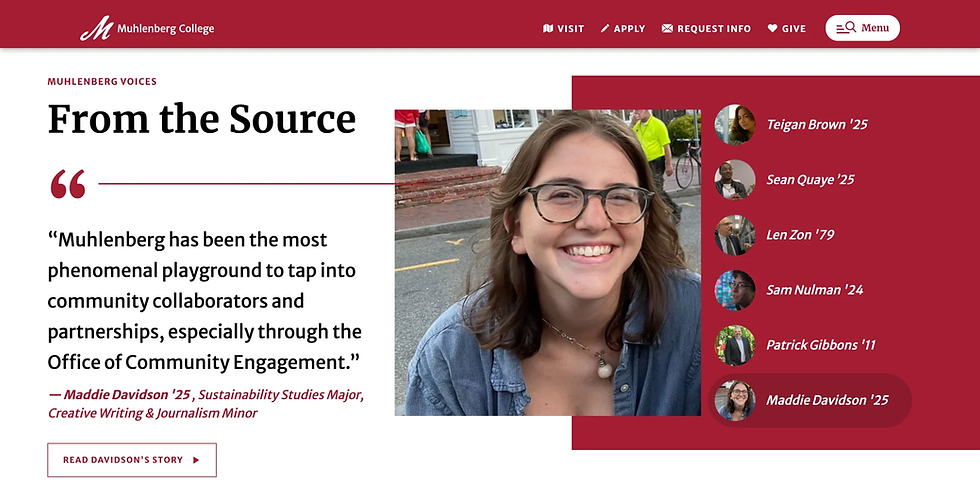
While lists and offices provide valuable details, content like this is institutional and fact-based, giving an impersonal feel. Muhlenberg’s testimonial approach directly addresses what this student is looking for—how their education and community involvement will actually play out—from the perspective of someone that they can see themselves reflected in.
Ultimately, this creates a personal connection between the potential student and the institution. In using testimonials, institutions can frame themselves as a community full of people who feel seen, supported, and motivated by the people around them, with plenty of room for potential students to have similar experiences.
If a Picture Speaks a Thousand Words, Videos Tell a Whole Story
Video content is paramount in today’s digital age, and the statistics back up its strength. Video content takes up 82% of all internet traffic—pairing this with the fact that 79% of individuals who interact with UGC feel influenced by it, UGC videos become a powerful tool to influence college and university decision making.
Examples of video UGC:
Bowdoin College’s Student Day in the Life: Shows a first-hand perspective of student life, highlighting research opportunities, career resources, and housing.
Emerson College Campus Traditions: Highlights events unique to the college as well as a feel for the campus experience.
University of Utah Dining on Campus: Takes viewers with the students to try on-campus dining experiences and get a feel for the university environment.
UGC can be combined with institutional production in the creation of institution-led video testimonials. Similar to written testimonials, these highlight unscripted, genuine thoughts and experiences of the students featured, but are filmed in a setting that provides high-quality visuals and clear audio.

How to Build a UGC Content Strategy
UGC presents somewhat of a Catch-22 for many institutions—how do you ask for and build a repository of UGC when the source material is supposed to be born from user experience rather than institutional need?
The answer lies in outreach and existing content. One search on YouTube of “college student day in the life” yields endless results of students creating on-campus, university-specific content that Gen-Z and Gen-Alpha users love to interact with. Given that these content creators have already made videos that capture genuine student experiences, all that’s necessary is to reach out to these students to see what partnerships and new content can blossom. Digital and on-campus call-to-actions for student creators can also uplift this mission.
Other social media platforms, particularly TikTok, can provide similar outreach starting points. 61% of Gen Z prefer UGC over other entertainment content types, proving that there is a clear market for videos like the example below.

In Conclusion
The marketing landscape in 2025 demands more than just well-funded campaigns and polished institutional messaging. Today’s students crave authenticity, relatability, and creativity—elements that UGC delivers in stride. By embracing user-generated content in the form of testimonials, video storytelling, and student-led narratives, higher education institutions can foster genuine connections with prospective students.
The key is not just to market to them but to amplify the voices of those who have lived the experience. In doing so, institutions can transform their branding into a dynamic, community-driven conversation—one that resonates far beyond a single marketing cycle.


Comments